A Violent Welcome Back for the Last Czarnian
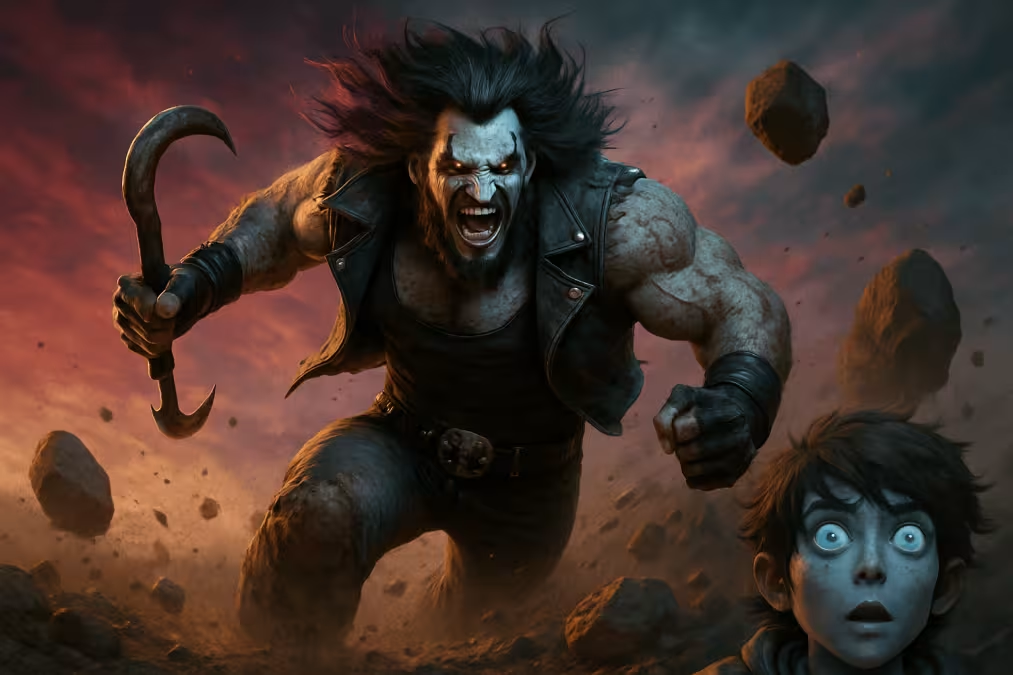
Lobo's return to a headline DC Comics series signals the publisher's intent to re-embrace iconic, larger-than-life characters with fresh, sometimes unexpected creative teams. Traditionally portrayed as an ultraviolent, sardonic antihero and interstellar bounty hunter, Lobo has existed across many tonal variations since his 1980s introduction. This latest iteration leans into both the character's brutal reputation and a willingness to experiment with tone and visual language. The announcement that Skottie Young would be a leading creative force generated interest because Young is known primarily for his whimsical, cartoon-inflected style and for reinventions that subvert expectations. Pairing him with Jorge Corona, whose work is dynamic, heavy on action and expressive anatomy, sets up a clear creative tension: a series that can be simultaneously playful and ruthlessly kinetic. Early descriptions emphasize set-piece violence and a sense of cosmic scale, but also promise unexpected emotional beats and a willingness to poke fun at the character's own mythology. For readers and industry watchers, the critical question is whether this Lobo will recapture the character's fanbase while attracting new readers who are intrigued by the creative team's reputation. In practical terms, the relaunch will be measured by sales, critical reception, and how effectively it threads legacy continuity with an accessible entry point for newcomers. If successful, this version of Lobo could become a standout example of how to retool a controversial character without erasing what made them memorable.
Skottie Young: Rewriting Riotous Energy
Skottie Young's involvement marks a notable tonal gambit for the Lobo property. Young rose to prominence through work that often juxtaposes cute or whimsical visuals with unexpectedly sharp storytelling — a sensibility that can disarm readers and then quietly deliver bite. In previous projects, Young has demonstrated an ability to reshape intellectual properties into versions that feel distinct and immediate while retaining the core emotional hooks. For Lobo, Young's role is reportedly focused on both writing and overseeing the series' overall creative direction. This suggests a more contained authorial voice than the typical writer-artist rotating team and raises expectations that the series will maintain a consistent tonal throughline issue to issue. Early promotional materials have hinted at a script that uses dark humor to both lampoon and celebrate Lobo's excesses. Young's approach may lean into satire of the ultra-violent antihero archetype: amplifying the character's absurdities while delivering the visceral action long associated with Lobo. That balancing act requires careful pacing and a nuanced understanding of what readers find compelling about Lobo — namely his unapologetic brutality, his tragic backstory as the last of his species, and the occasional glimpse into a contradictory moral code. Young's track record with character-driven reinventions means that, while the surface-level may feel surprising, the underlying character work could enable both longtime fans and new readers to invest in the series emotionally. Ultimately, the success of Young's stewardship will come down to marrying his distinctive voice with the savage heart of Lobo in a way that feels both fresh and authentic.
Jorge Corona's Art: Energy, Grit, and Visual Storytelling
Jorge Corona's art is a natural complement to the project's ambitions. Known for compositions that emphasize movement, weight, and exaggerated forms, Corona can bring the physicality of Lobo to the forefront — making every punch, crash, and chase feel consequential. His linework tends to convey rough textures and visceral detail, which suits a book that traffics in both cosmic spectacle and grounded brutality. In a team-up with Young, Corona's ability to switch between widescreen, cinematic panels and close-up character work will be crucial for establishing tone. Visual humor can play alongside graphic action; facial expressions and body language handled with care will allow quieter, character-led moments to land amid the noise. Additionally, Corona's choices in panel rhythm, pacing, and visual metaphor can heighten both the comedic beats and the moments of genuine pathos that this character can deliver when written with depth. The color work, lettering style, and page layouts will further define the series' identity — whether it skews toward neon-soaked space opera or grimy, lived-in noir. Early previews and interviews indicate that Corona and the rest of the art team are prioritizing clarity in action sequences while leaving room for inventive page design. That balance should help the book appeal to readers who want spectacle without sacrificing readability or emotional resonance.
DC Next Level: Context and Consequences
The Lobo relaunch arrives under the broader umbrella of DC's Next Level initiative, an editorial strategy aimed at diversifying tone, modernizing legacy characters, and experimenting with publishing approaches to find new readership. Next Level has presented itself as more than a cosmetic relaunch; it is framed as a platform for creators to take meaningful risks, whether through tonal reinvention, format experimentation, or unconventional team pairings. Within that context, Lobo functions as both a test case and a statement: a willingness to let a character historically associated with raw spectacle be steered by a creator known for subversive, character-forward work. If the series thrives, it will validate portions of the Next Level strategy by demonstrating that established intellectual properties can benefit from distinctive, auteur-driven reinventions. Conversely, if readership falters, it may prompt a recalibration about how far editorial teams should stray from core fan expectations. Beyond commercial concerns, the initiative has an artistic stake: to broaden the kinds of stories DC can tell and the audiences they can reach. For creators like Young and Corona, Next Level offers a platform to make bold creative choices under the banner of a recognizable franchise. For readers, it offers a promise of variety: from family-friendly takes to more adult-oriented, experimental, or genre-bending entries. Observers will be watching release cadence, variant marketing strategies, and cross-title integration as indicators of how Next Level will influence DC's wider editorial roadmap. Ultimately, the Lobo series will be judged by its capacity to be both a compelling work of comics and a meaningful contributor to DC's evolving publishing identity.